 FREE USA SHIPPING over $99

Why Winkler Uses 80CrV2 Steel: Toughness, Edge Retention, and Field Sharpening
Nov 10 2026 - 5:30
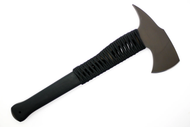
The steel used in Winkler axes like the Combat Axe is only one thing to love about them, but it is a big one. This short post will break down steel chemistry and performance attributes of 80CrV2, used by Winkler. Let’s take a closer look at what this alloy offers and why.
About 80CrV2 Steel and What It Offers
Winkler Axes (and knives) are noteworthy for their use of this steel alloy, because it offers a unique balance of hardness and toughness, a good balance across each.
The keys here are the concentrations of carbon and vanadium, which sit at between .75% and .85% and .15% to .25%, respectively, though this steel alloy also contains small concentrations of manganese, molybdenum, nickel and chromium as well.
The carbon concentration is just such that it forms carbides with vanadium in concentrations low enough to result in a fairly hard edge without making the steel brittle. This is critical in a tool steel even more than it is in a knife steel.
The thing is, as hardness and wear-resistance increase, the ability of the alloy to take and hold an edge increases. The double-edge here (if you can excuse the pun) is that the harder the steel is, the more brittle it is.
To put things lightly, it hardly matters if a steel can take a very sharp edge, or even hold it, if the alloy if prone to chipping, snapping, or shattering under stress.
Now, this is bad enough in a knife, but generally knives are not subjected to extreme forces of shock because they are only rarely if ever used as striking tools. With a Winkler axe (or any axe) that is hardly the case. An axe is first and foremost a striking tool.
This is the reason that so many hatchets and axes are made with steels that have comparatively low concentrations of carbon, such as 1045 and 1055. These steels have relatively low carbon concentrations which keeps them fairly tough even though they are generally softer than other alloys that have higher concentrations not just of carbon but of carbide-forming elements like vanadium, cobalt or niobium.
In the case of the 80CrV2 steel that is used in Winkler axes like the Combat Axe, the steel is remarkably tough yet still hard enough to hold an edge for a long time. At the same time, it is not so hard that it is too difficult to resharpen in the field, and not so hard that it is prone to the edge chipping, which would constitute a massive deficiency in an axe.
The one note to make here is that, while there is chromium in this alloy, there really isn’t enough that the steel could be considered stainless. This alloy, 80CrV2, contains chromium at a concentration of roughly .4% to .6%, and to be stainless, a concentration of 10% or greater is generally needed before the steel is considered stainless.
The bottom line here is that 80CrV2 is remarkably tough while still retaining the ability to hold an edge, but you need to keep it clean, dry and oiled or it will likely rust, especially if you use it outdoors a lot.
What You’ll Love About the Winkler Combat Axe, Besides the 80CrV2 Steel
Besides the fact that these Winkler axes are made with unique and highly field-serviceable steel alloys, there are a lot of other features you’ll likely appreciate about the design of the axe itself.
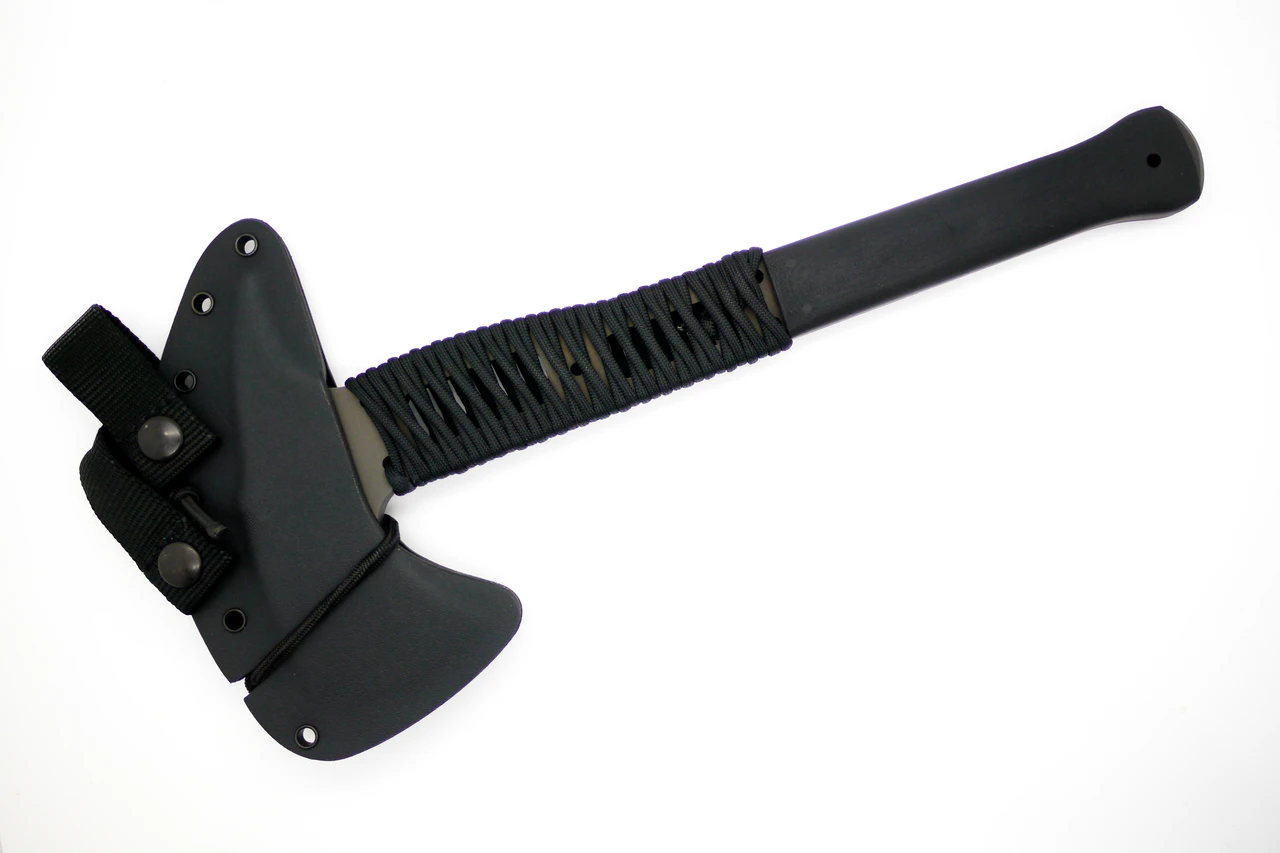
One is the full-tang (for lack of a better word) construction, paired with a black laminate handle with a partial cord wrap. The fact that the axe itself is forged from one billet or bar of steel means that the “haft” can’t break, because there isn’t one. You could use this axe as a pry bar and it would work just fine. In fact, that’s one of the things it’s designed to do.
Plus, the laminate scales require no maintenance, the partial cord wrap makes it easy to maintain a strong degree of control when choking up under the head of the axe, and if the chips are ever down you can remove the cord wrap and use the cord for whatever the occasion requires.
The spike on the poll is another nice touch, as it can be used to round out the versatility of the tool and used for digging, breaching, or other things the straight bit of the axe might struggle with slightly.
If all of that weren’t enough, the fact that it comes with a Kydex sheath that allows for mounting and carrying in a variety of different ways is a nice finishing touch.
All in all, as a small pack axe or hatchet, this Winkler axe really hits out of the park.
Shop Winkler Axes Here
Want to learn more about the Winkler axe in question? Check out our collection here and if you have any product-specific questions feel free to get in touch with us. We are more than happy to help.