 FREE USA SHIPPING over $99

About 2 Common Steels Used in the Lionsteel T5 and T6 (3V and Niolox)
Oct 24 2026 - 7:31
Lionsteel Knives like the T5 and T6 are popular knives that support a premium price point, and justifiably so. They both sport practical drop point blades and comfortable handle ergonomics that together make them highly effective not only for general utility but for camp chores, bushcraft, and as hunting or survival knives.
They’re also made with two really great steels, one of which is not very commonly encountered. We’ll break down the details to each here.
About CPM-3V
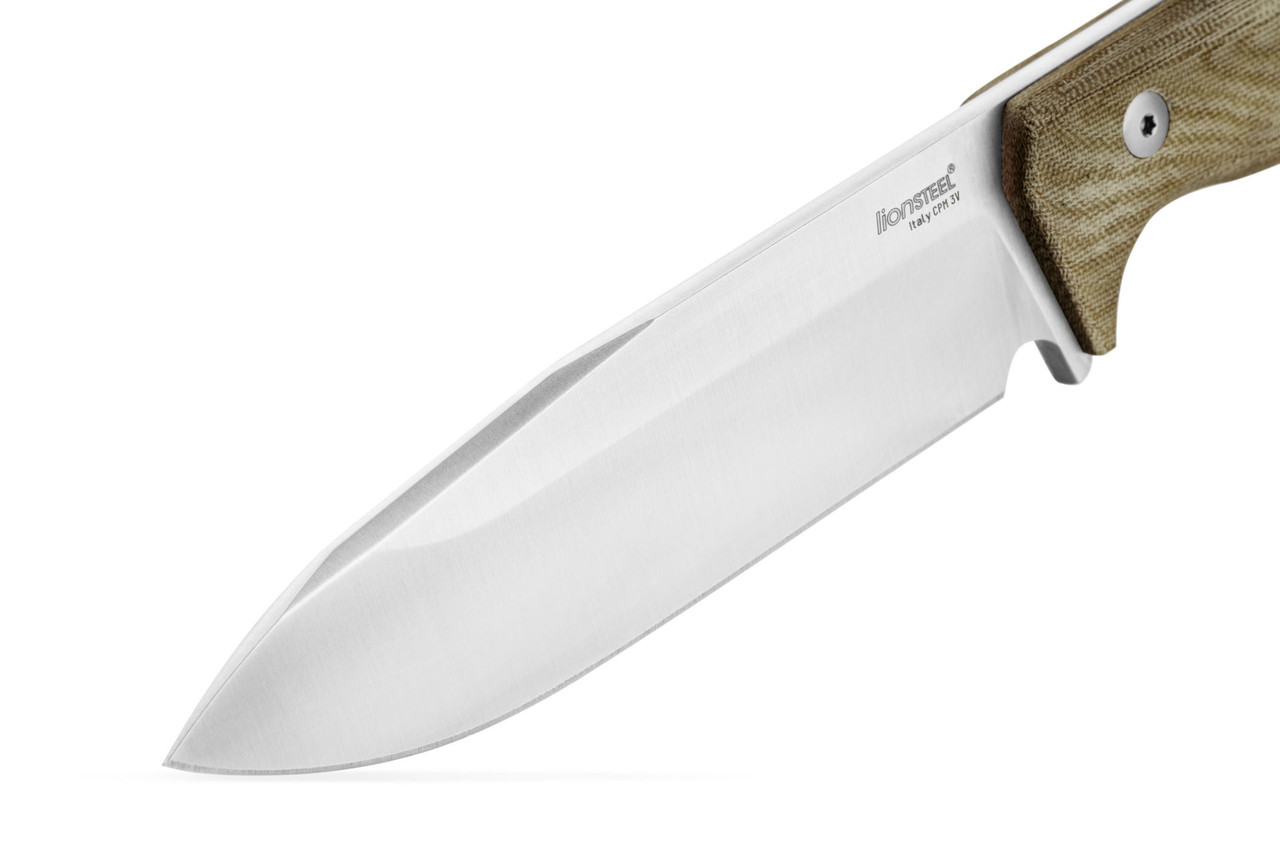
First, let’s take a closer look at the T6, which in this case sports a blade of CPM-3V steel. This alloy gets really high marks on toughness, and is actually one of the toughest blade steel alloys on the market, bar none.
The chemistry of the knife steel tells most of the picture. This alloy has a carbon concentration of .8% and a chromium concentration of 7.5%. It also contains 2.75% vanadium and 1.3% molybdenum.
That vanadium is the biggest player here, since it forms carbides with the carbon in the steel; this steel has a relatively fine distribution, too, resulting in a very hard alloy that resists wear, offering excellent edge retention.
The other half of the picture is that vanadium is very hard and dense, which results in a very tough tool steel alloy. Molybdenum pulls its weight in this capacity too, making this a very, very tough steel.
In fact, CPM-3V is often cited as one of the toughest tool steels currently available, and one that offers good wear resistance on top of it.
Now, wear resistance is one thing; the main advantage that it offers a knife user is that it will reduce the frequency with which you need to resharpen the knife. But, toughness, especially in a knife with a blade that is nearly 6 inches long, as in this case, is no small matter.
Being that this knife will probably be abused at some point or other by someone carrying it, and used for batoning or splitting, that toughness is a big bonus.
It’s a wonder that more survival knives aren’t made with CPM-3V, for this reason, until you go back and consider the chromium concentration more closely.
Since it has only 7.5% chromium, this is not considered a stainless alloy. It offers a very slight modicum of corrosion resistance, but at the same time, it’s really very easy to get this steel to rust.
So, while this can make an excellent survival or bushcraft knife, you should be very careful about the conditions in which you use the knife and how you store it. Never put the knife away wet, and periodically oil the blade to keep it from rusting, and you should be good to go.
About Niolox Steel
Now let’s take a closer look at the Niolox steel blade of the Lionsteel T5. Though this knife could also make an excellent survival, bushcraft, or hunting knife, since it has a slightly shorter blade, toughness is not as critical here.
That being said, it is made with another excellent alloy that is considered stainless, which, in this case, is Niolox steel.
Niolox is made with a unique combination of .8% carbon (about the same as 3V) along with nearly double the chromium at 13%, and with some niobium added in at .7%. It also contains vanadium at about .9% and molybdenum at 1.1%
Niolox may not be as though as 3V, but it contains similar chemistry with respect to carbon and carbide-forming elements, giving it fairly good edge retention. It also has a fine grain structure along with vanadium and molybdenum, both of which result in a fairly tough steel.
Niobium and chromium are also key players here, since niobium forms very fine, hard carbides. This gives Niolox the ability to support a very fine edge that is fairly easy to resharpen, and one that is generally tough enough to avoid chipping.
As for the higher chromium concentration, it should be apparent here that it makes this alloy much more corrosion resistant than the former entry since it is present in much higher concentrations.
At the end of the day, what you get with Niolox is a fairly tough tool steel; perhaps not as tough as 3V, but one that has a fine grain structure that supports a fine edge that will last without being too tough to resharpen, as well as a fairly corrosion-resistant alloy.
Still Have Questions About Lionsteel Knives?
This post only covers two of the models of Lionsteel knives that we sell here, and only two of the steels used to make them. If you have any questions about our Lionsteel knives or the steel used in them, get in touch with us and we will be more than happy to help.