 FREE USA SHIPPING over $99

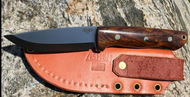
Caring for a Leather Knife Sheath
Aug 13 2026 - 7:24
There are many reasons that modern knives are still sold with leather sheaths, and why aftermarket leather knife sheaths remain so popular, despite modern alternatives like nylon and Kydex.
Leather is soft, supple, comfortable, and over time, will form not only to the contours of your knife, but to you, making it peerless for comfort. Plus, a leather sheath delivers timeless class that modern thermoplastics just can’t match.
Of course, being a natural material, you need to know a bit more about how to properly care for a leather knife sheath in order to ensure it goes the distance. Here are our high-level notes for leather knife sheath care.
Breaking in a Leather Knife Sheath
First, let’s talk about breaking in a leather knife sheath, because we have recommendations that are a little different from what you’ll find out there in darker corners of the internet.
There are lots of tips and tricks, ranging from oiling sheaths, to microwaving them, to running them over in a car, to filling a bag with water, putting it in the sheath, and freezing it.
We recommend none of these things. There is one proper way to break in a knife sheath and one proper way only, which is to use it.
Carry your knife. It will take a while, but at the end of the day, the best way to break in a leather knife sheath is just to use it. Over time, it will produce a custom-like fit and develop a patina that is entirely unique to it. Nothing worth having comes cheap, and there’s no effective way to force the break-in of a leather knife sheath.
Leather Knife Sheath Storage
Now let’s cover some basic notes for storage. One, you should never store your leather knife sheath in a place wherein it will be exposed to direct sunlight, where it will be exposed to extreme temperature shifts, and most importantly, where it will be exposed to high humidity.
Just like high humidity will rust steel, it will eventually cause leather to warp and rot. It is the enemy. You should store your leather knife sheath in a place where it will be cool and dry most of the time. Not desert dry, because that can also be bad for leather, but anything less than 50% relative humidity is a good bet.
Also, do not store your knife in its leather knife sheath for a prolonged period of time, since, despite the fact that leather is breathable, it can trap moisture next to the blade and will cause pitting and corrosion, especially on steels that are not particularly rust resistant.
The best bet? Just don’t store the knife in the sheath for a prolonged period of time.
Notes for If It Gets Wet
If your leather knife sheath gets wet, not damp, but soaked through, you need to be very careful about what you do next. Drying it out too quickly can cause it to warp, crack, delaminate, or change its dimensions. It can also cause the leather to harden as it dries.
On the flip side, if you don’t dry it expediently, the leather will develop mold and mildew or rot. So you do need to make sure you dry the sheath out quickly, you just don’t want to force it.
Remove the knife from the sheath, first of all. That moisture is even worse for the knife than it is for the leather. Then find a cool, dry place with plenty of airflow and place the sheath there. If you can, crumple up some newsprint and stuff it inside the sheath. Don’t stretch it, just place some loosely inside the sheath if you can fit it in.
Once the sheath is dry, it may need to be conditioned or oiled to prevent damage to the fibers, which brings up the most important point, which is leather conditioning.
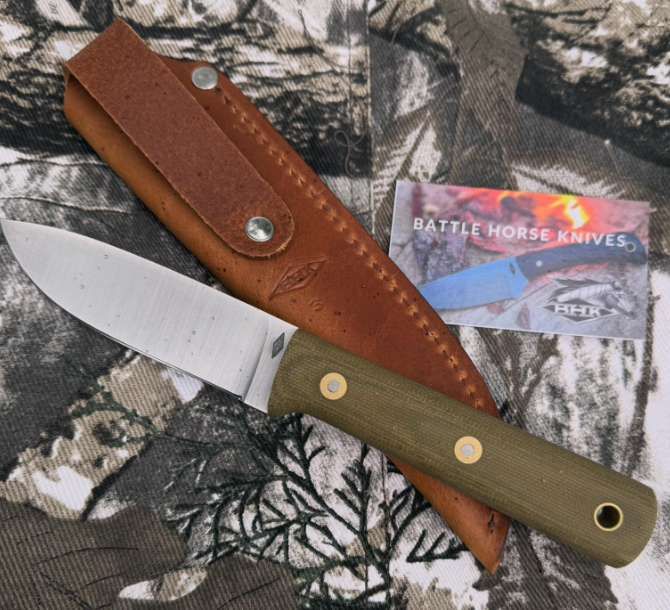
Periodic Conditioning of a Leather Knife Sheath
Leather is a natural material that has pores and fibers. It can dry out, separate, warp, crack, and worse if these fibers are not maintained. That’s what happens when leather dries out, so it is critical that a leather knife sheath is conditioned in some way or other from time to time.
There are commercial leather products you can use like Mink Oil, but beeswax, Neatsfoot oil, and other conditioners are just as effective.
Every six months or so, it’s beneficial for you to oil or otherwise condition the knife sheath. Leather conditioners will not only keep the leather soft and supple, but they will also help prevent the leather’s pores from absorbing moisture, which can help prevent decay.
Overall, anytime you notice the leather starting to stiffen, condition it to keep it in good shape. Once too far gone, leather cannot be restored, but you can help keep it from getting there in the first place.
Here for a New Leather Knife Sheath?
Here for a leather knife sheath for one of your favorite blades? Check out what we offer here, and if you have any questions, get in touch with us. Also, if you start carrying in a leather sheath, make sure you heed the advice in this article; it will serve you well.