 FREE USA SHIPPING over $99

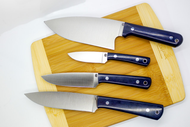
A Brief Kitchen Knife Care Guide
May 22 2026 - 4:57
You wouldn’t use your kitchen knives for the same things you use bushcraft knives for, and rightfully so. All the same, it still benefits you to know how to properly care for a kitchen knife set, even if you wouldn’t abuse these knives.
So, here’s your high-level guide.
Keeping Rust Off the Blade
Prevention is the best medicine. Rather than removing rust, it’s best to keep it off in the first place.
After every use (no exceptions) thoroughly rinse and dry your blade before you store it. If the blade is a non-stainless alloy, add a drop of oil to both sides of the blade. Tsubaki oil is a good choice here as it is food safe
You might also want to add a drop of oil where the tang meets the scales, if the tang is exposed at that margin.
If your knife gets rust on the blade, a small bloom of rust can usually be buffed away with a scouring pad (be careful when using one to avoid damage to the edge, or to avoid cutting yourself). Fine steel wool can also be used to remove small rust deposits.
Special Notes for Carbon Steel Kitchen Knives
If your kitchen knives’ blade steels are not corrosion resistant, be careful when cutting certain foods, specifically acidic fruits and vegetables, as these can cause staining and discoloration of the blade.
However, some knife owners are fond of the patina that develops on a carbon steel blade with exposure to certain foods. Each patina is very unique and will actually help provide a modicum of protection to the blade against rust.
Storing Responsibly
You can keep your kitchen knife set in the kitchen, but make sure you’re responsible about humidity. High humidity will rust knives in a heartbeat, unless they’re made from a very corrosion-resistant alloy.
Also, store your knives either in a sleeve, a sheath, a knife block, or on one of those magnetic strips. Never store them loose in a drawer. Not only is this dangerous but the edge will be damaged from incidental contact with all your other kitchen wares.
How to Tell When It’s Time to Sharpen
A sharp knife is a safe knife, but before sharpening you need to know how to tell when it’s time to resharpen. Here are some cues:
- If the knife crushes rather than cutting through the skin of a fruit like a tomato or an apple.
- If your blade is requiring excessive downward pressure when trying to cut through meats.
- When cuts look ragged or torn, that’s a sign that your knife needs to be resharpened.
Ultimately, if the blade is requiring more force than it should, that’s a sign that it’s time to sharpen the knife.
How to Resharpen Kitchen Knives
First, you need a sharpening stone in an appropriate grit, but for most knives that only need to be retouched, anywhere between 600 to 1000 will work just fine.
Place the flat of your blade against the stone, with the edge pointing away from you. Raise the spine of the knife about a centimeter off the stone, with just the edge contacting it.
Slide the edge away from you, as though you are attempting to shave off a thin slice from the top of the stone. Repeat this ten to twenty passes, then flip the knife over and repeat the process on the other side.
Clean the edge, then check the knife when you are done. If it still needs some work, repeat the entire process before checking the edge again.
For most kitchen knives that are in reasonably good condition, this is all you will need to do to restore the edge.
How Often to Resharpen?
How often you need to resharpen your kitchen knives is determined by how frequently you use them, what sorts of foods you routinely prepare, and of course, the steel. Some steels are harder than others and hold an edge for longer.
Resharpen anytime the knife is not cutting as it used to (as indicated in a previous section here). Otherwise, a good practice for home cooks is simply to sharpen their knives about once per month, to keep the edge in sharp, cutting shape.
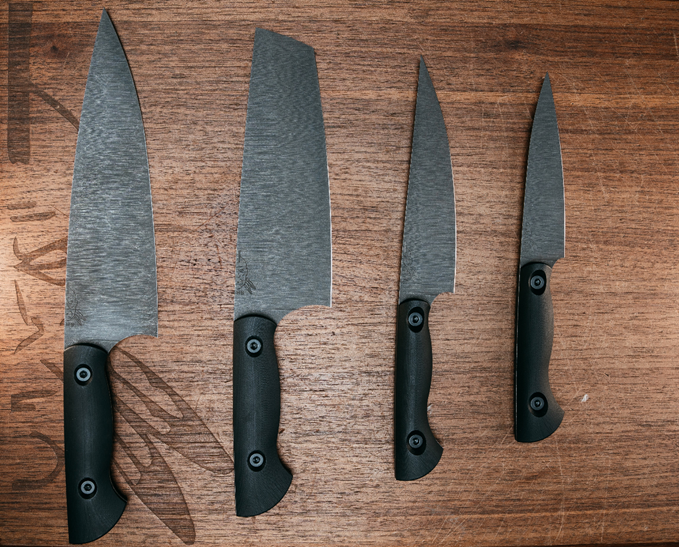
Never Wash Your Kitchen Knives in the Dishwasher
Regardless of what steel and knife handle scale materials your kitchen knives are made with, never put them in the dishwasher. The high heat and harsh detergents will accelerate corrosion and rust on non-stainless alloys, and worst of all, will damage even tough knife scales, causing them to warp and separate from the tang.
Don’t try to figure out a way to make it acceptable to run your kitchen knives through the dishwasher, period. Wash them by hand every time you use them, then dry and put them away.
Things Not to Do with Your Kitchen Knives
To round things out, here are just a few more things you should never do with your kitchen knives.
- Never put them in the dishwasher (as stated).
- Don’t store them loose in drawers.
- Don’t leave them sitting in the sink or the drainboard.
- Never put them away dirty or wet.
- Do not use the tip to pry.
- Do not use glass or metal alloy cutting boards (you will blunt or damage the edge).
- Use the spine, not the edge, for scraping.
Trust The Knife Connection for a New Kitchen Knife Set
Here for a new kitchen knife set? In addition to bushcraft and camp knives, we carry a variety of kitchen knives from the top brands, including Hoffner, BRISA, Half Face Blades, LT Wright and more. Check out our collection and get in touch with us if you have any questions.
Then remember the tips in this page (bookmark it if you need it for reference) and feel free to reach out to us if you want to know anything about kitchen knife care that isn’t contained in this guide. We’re more than happy to help.