 FREE USA SHIPPING over $99

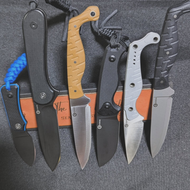
A Quick Reference to Knife Blade Profiles (Knife Blade Shapes)
Apr 28 2026 - 3:06
A knife’s blade shape is also called its profile (and in some instances, its pattern). The shape of a knife’s blade, (or the knife profile, as it were) is one of the main features, along with size, blade steel, and grind, that influences the overall utility of a knife.
With that said, here are some of the more commonly encountered knife blade profiles out there.
Drop Point
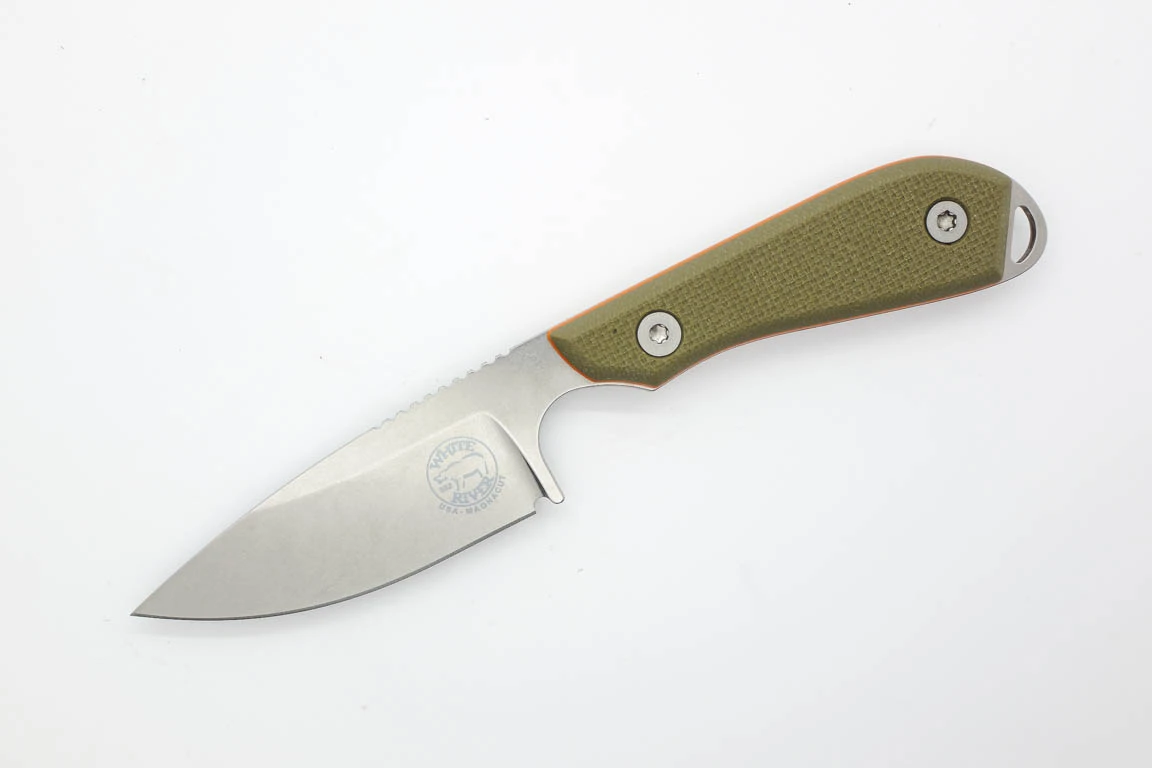
In a drop point knife profile, the spine curves downward to meet the tip of the knife. Generally the downward curvature is mild and not abrupt; this results in a point that is relatively fine but still has a solid amount of blade stock behind it. This profile is enormously popular and one of the most commonly encountered blade profiles. The majority of ESEE Knives sport drop point profiles, along with Dave Wenger blades like the Aphid 2 and White River Knives such as the Brave and M1 Caper. Many Ontario Knife Company knives, like the RAT 3 and Ranger Model 3, also sport drop point blades.
Clip Point
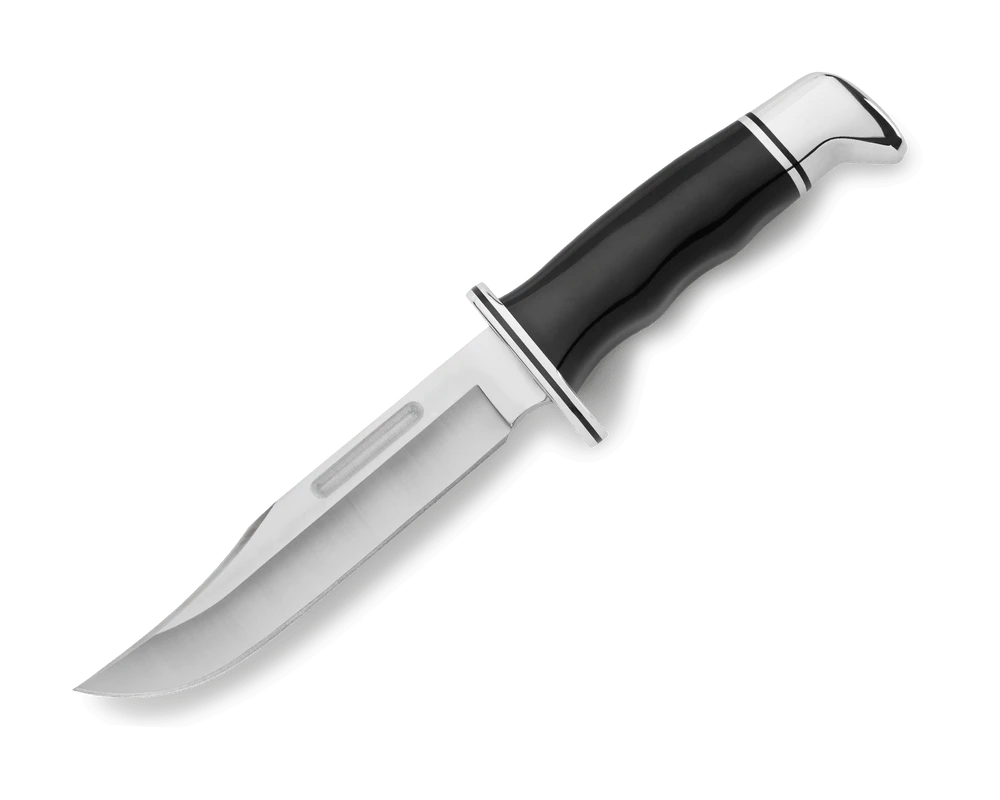
A clip point blade has some steel “clipped” away from the spine near the tip, resulting in an inward curvature of the spine. This pattern is indicative of bowies, but is also common on some Buck Knives like the 119 Special and 110 Folding Hunter. A clip point will penetrate better than a drop point but it will also be more fragile.
Spear Point
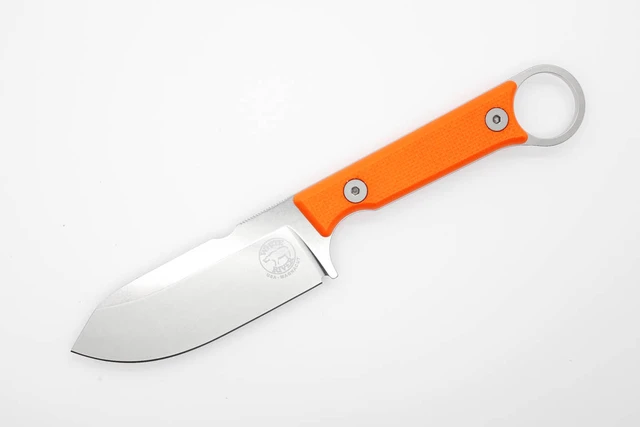
In a spear point knife, the edge near the tip and the spine will curve together to meet each other, resulting in a symmetrical profile. Spear point knives have very strong tips and are good as all-purpose knives. Many bushcraft knives sport spear points because the tip can be used for drilling, in addition to the fact that it is strong. If both edges of the knife are sharpened, a spear point is referred to as a dagger point or dagger profile. As an example, the White River Knives Firecraft has what some would call a spear point.
Needle Point
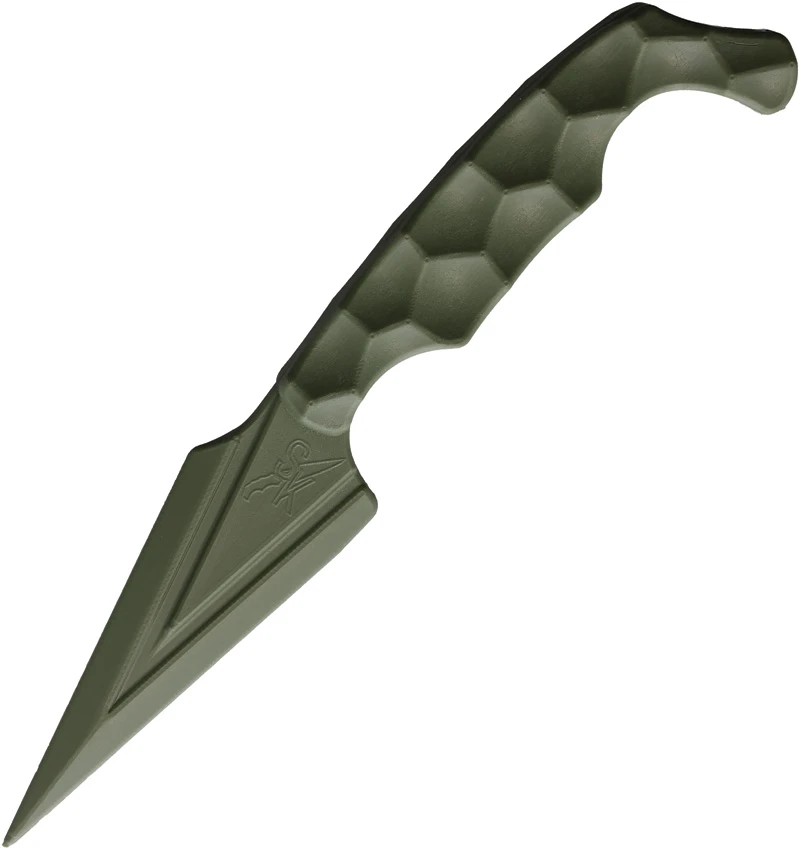
A needle point is the same as a spear point, except finer. Knives with needle points are designed primarily for thrusting and piercing, and are generally more fragile than other types of blades. Typically one edge is sharpened, as in the case of the CRKT Biwa, but in needle pointed knives like stilettos, there may be two edges.
Straight Back
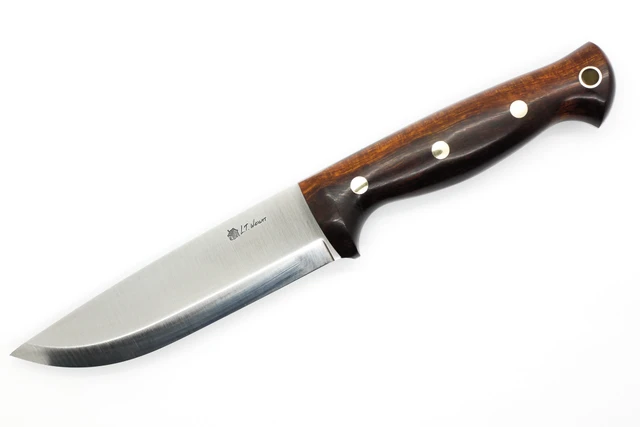
A straight back knife is the same as a drop point except that the spine is straight and does not curve downward to meet the tip. The relative virtues are effectively the same. Many Mora and Martiini knives sport straight back profiles.
Hawkbill (AKA Talon AKA Karambit)
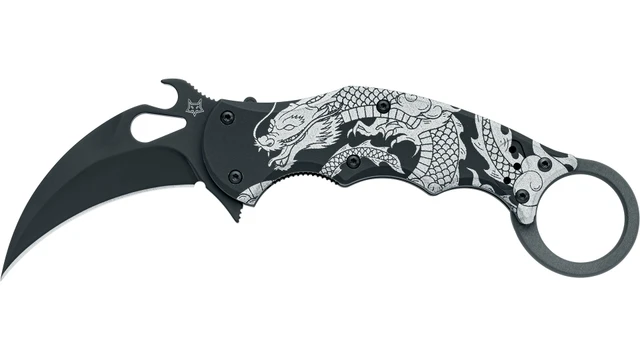
In a hawkbill knife blade profile, also called a talon profile, the edge of the knife is pulled inwards. This pattern is also sometimes called a karambit and is designed for slashing and pull or draw cuts. Pruning and mushroom knives also often sport this profile. They are harder to sharpen than normal profiles and a flat stone cannot be used, only a sharpening rod or some other type of sharpening system.
Swept blade (AKA Trailing Point)
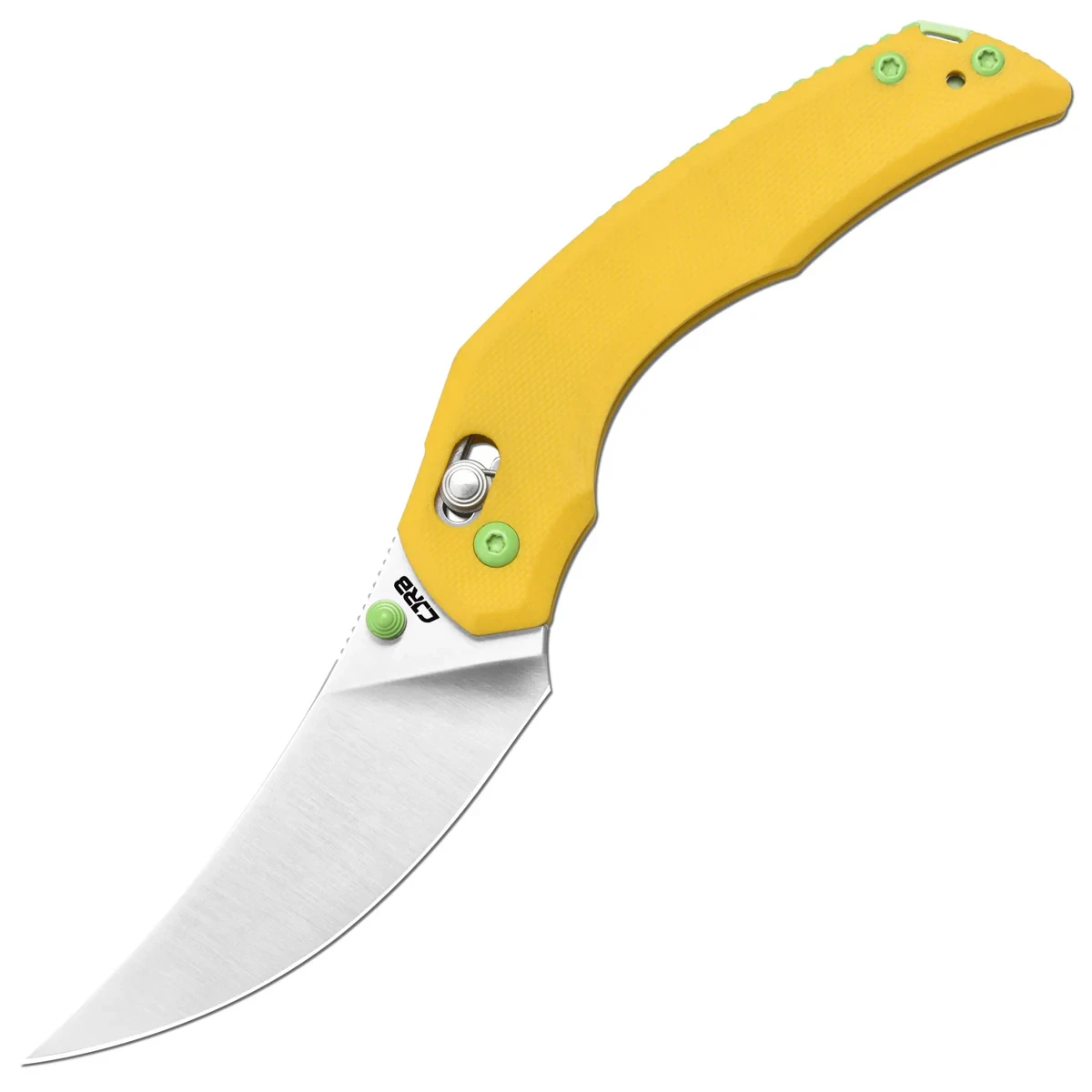
A swept blade knife is also referred to as a trailing point knife. In this pattern the edge is gracefully arced, along with spine, creating a profile that looks vaguely like part of a semicircle. These knives are best suited to sweeping cuts.
Skinner (AKA Muk or Nessmuk)
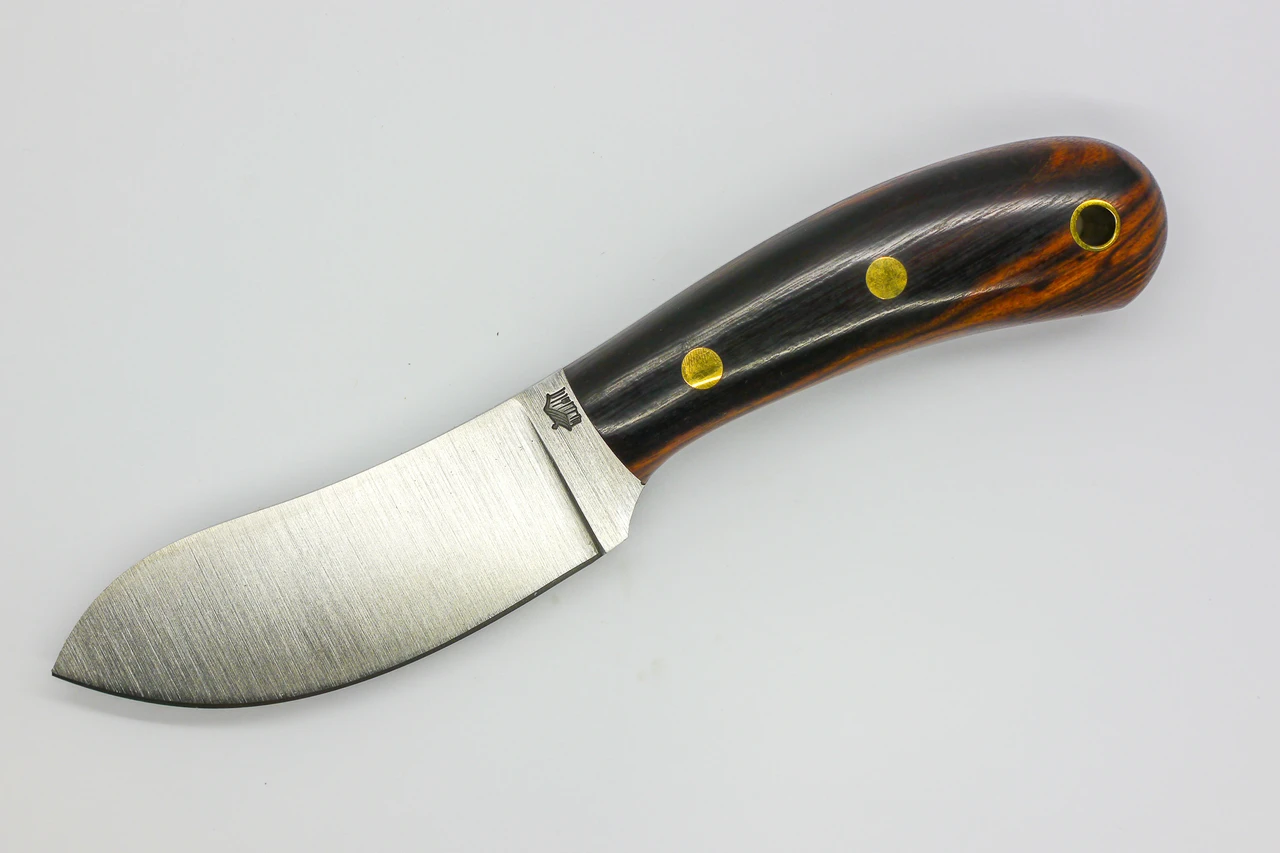
A skinner is a knife with a fairly oblique point and a wide, swept belly. Like a swept blade, a skinner is useful for making long, sweeping cuts (useful in skinning, hence the name) but the width of the blade is greater and the point is more obtuse. This pattern is sometimes called a “Muk” or a “Nessmuk,” a name given to infamous woodsman George Washington Sears, who carried such a pattern. The LT Wright Camp MUK, unsurprisingly, sports a Nessmuk patterned blade.
Sheepsfoot
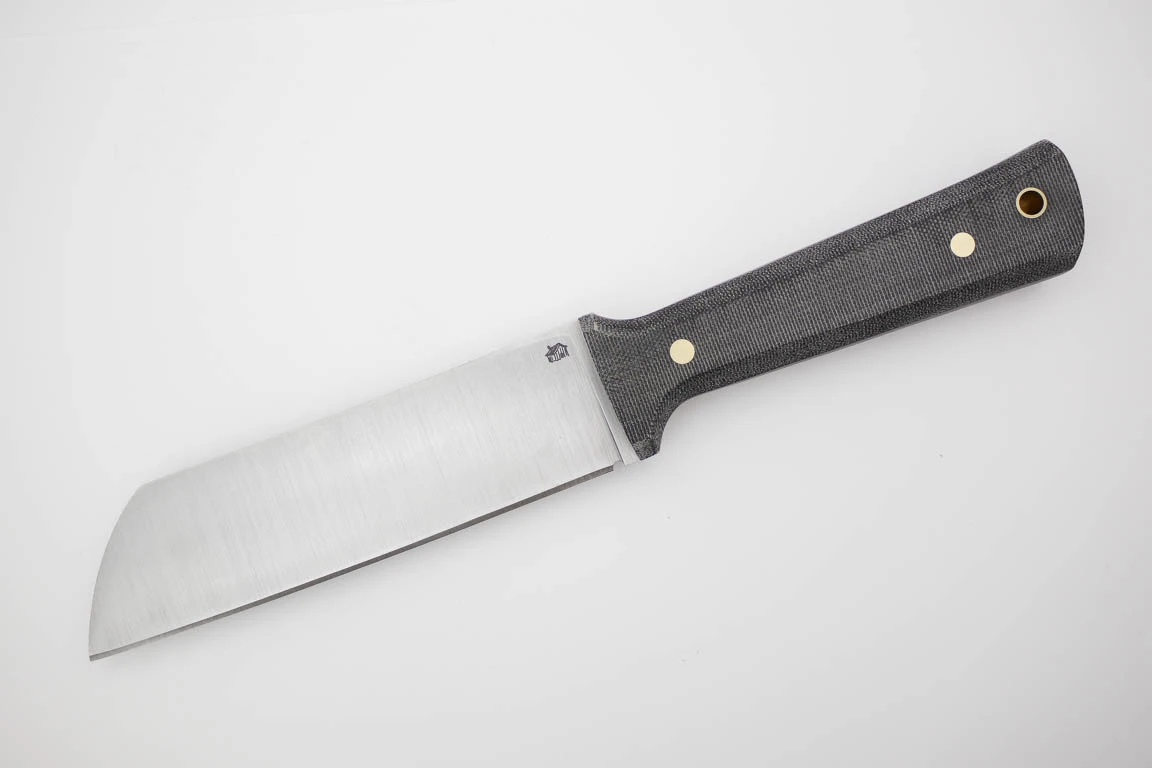
A sheepsfoot knife has a very oblique point created by a sharply downturned spine. As a result, these knives lack fine points and are not the best for detail work or piercing. At the same time, the somewhat obtuse tip is very robust and will resist breakage. As a result, sheepsfoot pattern knives are popular among blades used as chopping tools, as well as among boat knives, wherein a sharp point would be dangerous. The Bradford Guardian 3 is available with a sheepsfoot profile blade and is a good example of this pattern.
Wharncliffe
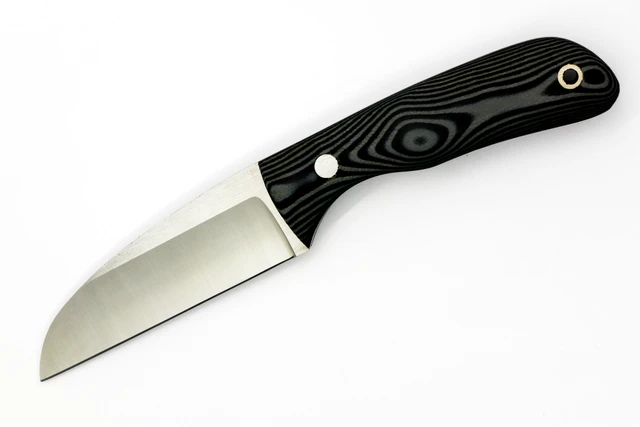
A wharncliffe knife is similar to a sheepsfoot in that the spine curves downward to meet the point, but the point is much finer. That’s the only real difference; as a result, wharcliffe knives, or “wharnies” are more effective for thrusting or piercing maneuvers.
Cleaver
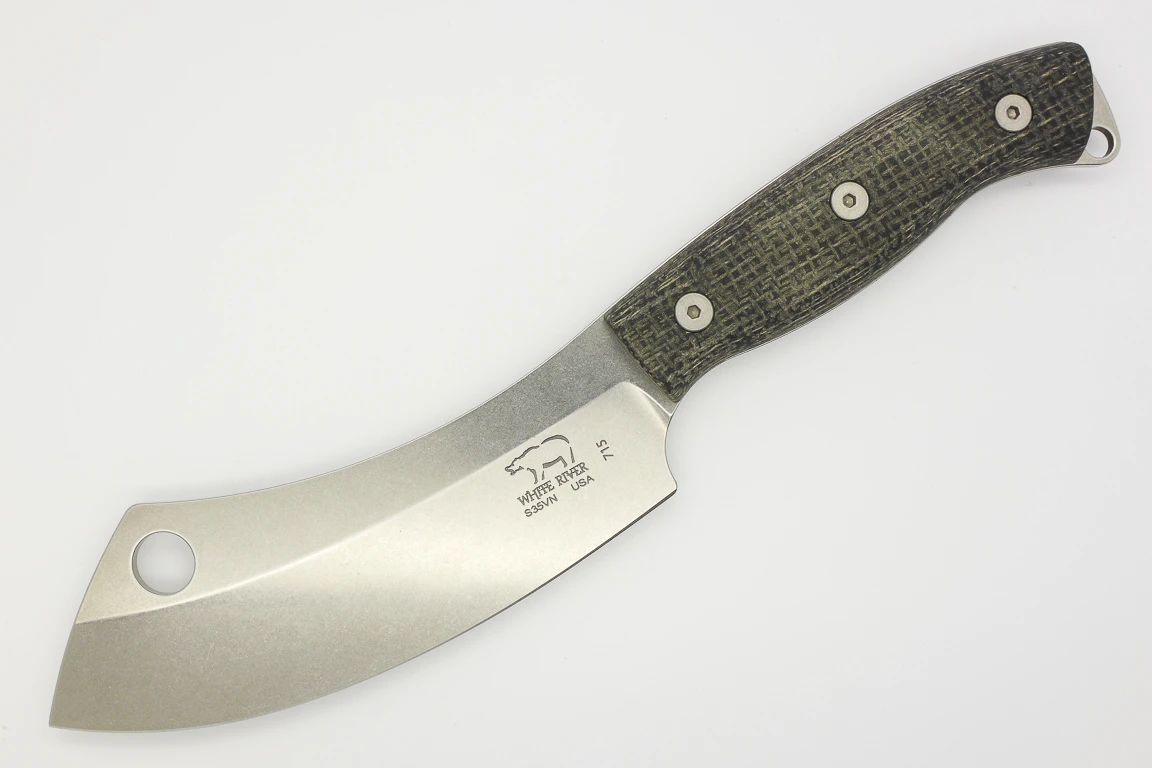
A cleaver has a blunt point and a heavy blade. These knives are designed to be effective at chopping but can also be used for slicing. Because they are so commonly used for chopping, cleaver-pattern blades often have a convex or “ax” grind, which is somewhat rare among knives. Most survival and bushcraft knives have either flat or half-flat grinds, and many hunting knives have hollow ground blades.
Kukri
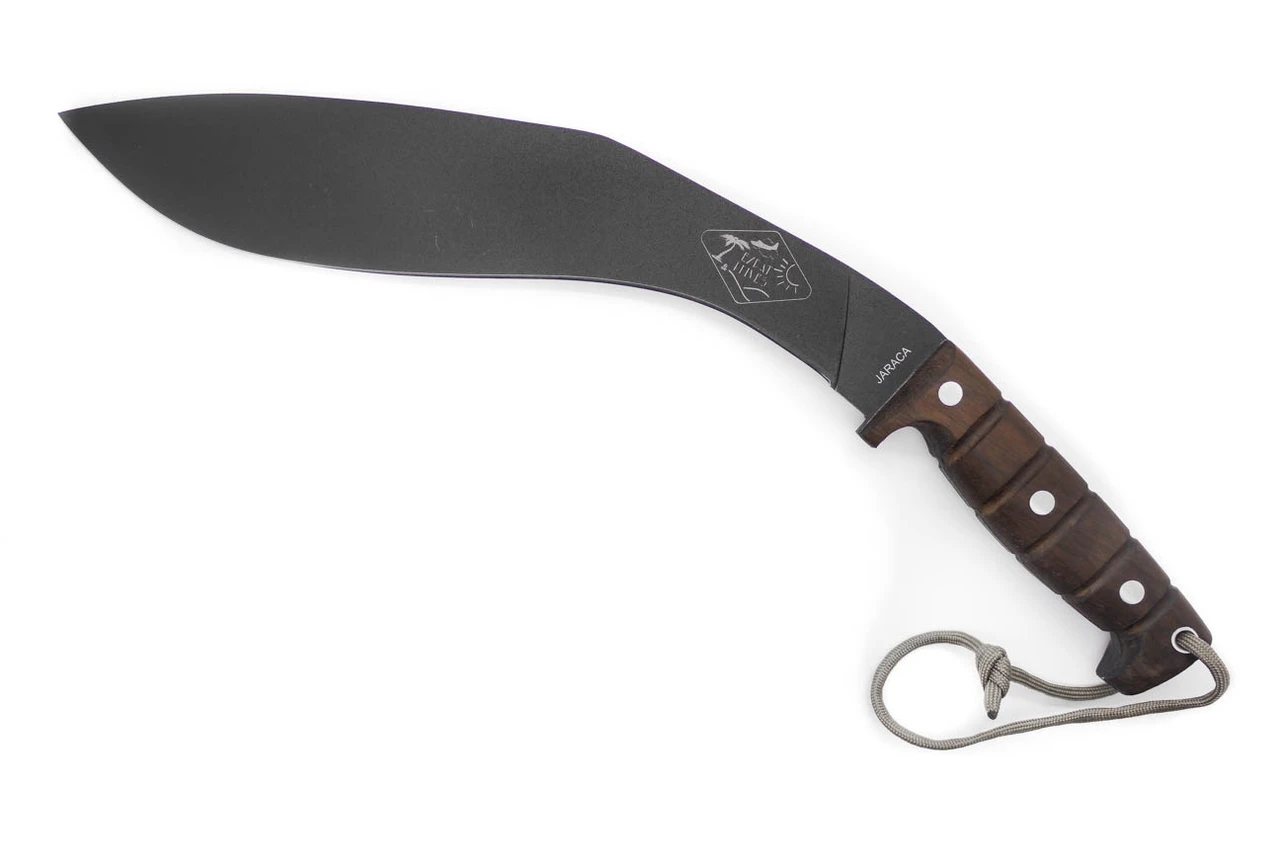
A kukri is more of a pattern of knife than a knife profile, but in a kukri, the blade will be curved forward, and there will be a secondary curve in the blade, or a “recurve.” Kukri patterns have a center of mass that is far forward, making them very effective at chopping, like a cleaver. The main difference is in the recurve of the blade as well as in the fact that a kukri still maintains a point.
Tanto point
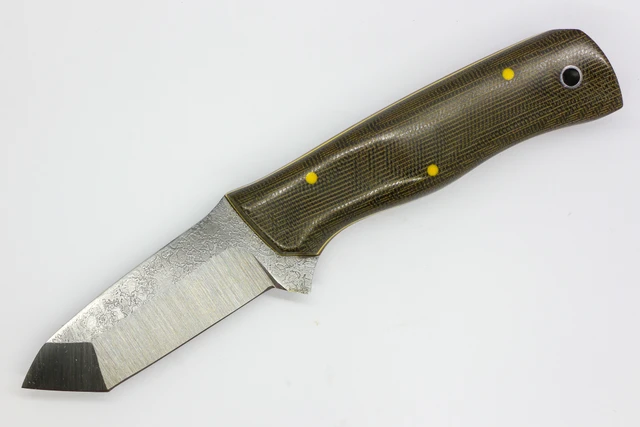
In a tanto point, there are at least two grinds, one for the main edge and one for the edge near the point. As a result, a tanto point has a unique angle in the edge which other knives lack (as shown in the image above). The main advantage of a tanto point is that the angle created by the second grind results in a tip that is extremely strong. Tanto points are unlikely to snap or break even when used for aggressive thrusting or piercing.
Leaf-Shaped
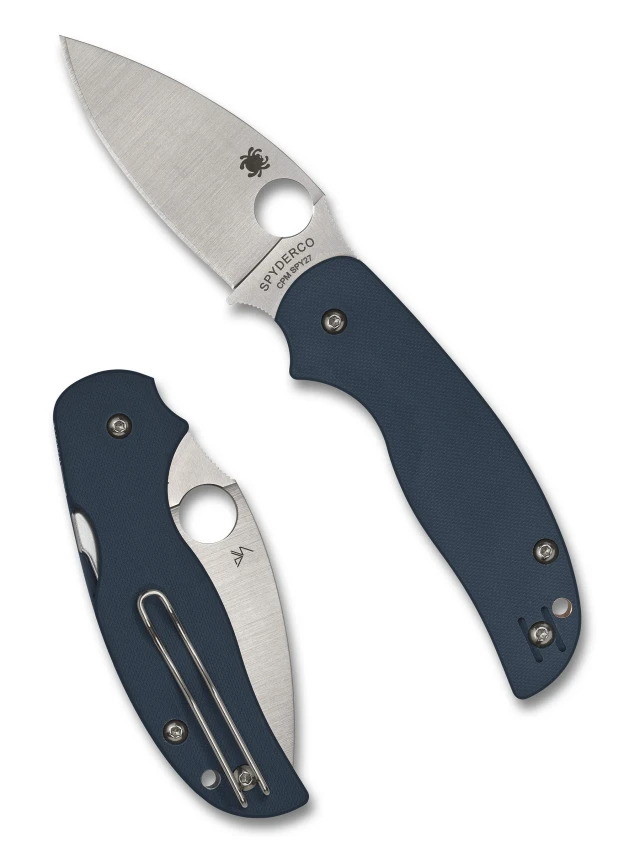
Lastly, a leaf shaped blade is one that flares out toward the point. Many Spyderco knives are characterized by their leaf-shaped, humpbacked profiles. In larger blades (like swords) a leaf shaped blade adds mass near the point, making them effective for slashing and chopping. In smaller knives, a leaf-shaped blade is simply more effective for slicing.
Explore These and Other Knife Blade Profiles and Patterns Here
Whether you landed here to learn more about knife blade profiles or want to add something from Ontario Knife Company or White River Knives to your collection, take a closer look through our catalog or get in touch with us directly and we will be more than happy to help.