 FREE USA SHIPPING over $99

CPM MagnaCut vs. CPM-3V: How They Stack Up Against Each Other
May 4 2026 - 3:03
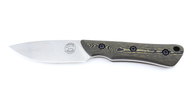
Both CPM MagnaCut and CPM-3V are super steels that offer excellent properties with respect to hardness, toughness, and corrosion resistance. They are also alloys you will encounter if you peruse our lines of premium knives, such as LionSteel, Reiff Knives, and White River Knives.
This post will put some of their attributes side by side so you can make a more informed decision.
First, the Chemistry
To understand what either of these alloys offer, first we need to take a closer look at steel chemistry.
For CPM-3V, you get:
- Carbon: .8%
- Manganese: .3%
- Silicon: 1%
- Chromium; 7.5%
- Molybdenum: 1.3%
- Vanadium: 2.75%
As for CPM MagnaCut, you get:
- Carbon: 1.15%
- Chromium: 10.7%
- Niobium: 2%
- Vanadium: 4%
- Molybdenum: 2%
- Nitrogen: .2%
These elements are the key drivers of the desirable attributes of both of these steel alloys, which, as you can see, are different enough to merit some considerable disparity in performance.
The Trinity of Knife Steel Attributes
There are three main broad attributes that define the performance and characteristics of knife steel. These are hardness, which determines edge retention and wear resistance, toughness, and corrosion resistance.
Hardness (Edge Retention and Wear Resistance)
Hardness is determined by heat treatment, carbon concentration, and the concentration of carbide-forming elements like vanadium.
All being considered, MagnaCut will take a better heat treatment and will therefore be harder than CPM-3V, mostly as a result of its higher carbon concentration. But the thing about MagnaCut is not just that it has more carbon; it has more vanadium and some niobium, both of which form carbides, making the steel harder and improving the grain structure.
Toughness
When it comes to toughness, CPM-3V takes the cake here. This is because this alloy actually wasn’t designed or intended for knives in the first place, but for punches, dies and other tools that are consistently abused.
This is due, partially, to the very thing that costs 3V a little in terms of edge retention, which is namely that it has a lower carbon concentration. Whereas high carbon concentrations enable a better heat treat and a harder steel, carbon also makes steel brittle when the concentrations are too high.
Therefore 3V, with its .8% carbon in the matrix is a tougher steel that is less likely to chip, snap, or shatter.
Although, if we’re being honest, MagnaCut is also a very tough steel. It’s not that either is not tough. It’s that 3V is a hair tougher.
Corrosion Resistance
There are two main elements that are added to steel to resist corrosion. These are nickel and chromium, but in knives, chromium is really the only one that is used.
Therefore, you only need to look to MagnaCut’s 10.7% chromium to see that it’s a little bit better at resisting rust and corrosion than 3V.
To be honest, 3V is actually on the cusp of what would be considered stainless. It just doesn’t have enough chromium. It’s more like it’s stain-resistant than stainless, and in harsh environments, especially in the presence of saltwater acid, it will rust, so be aware of that.
By contrast, MagnaCut is truly stainless and it is resistant to harsh environments. Under normal use, it won’t rust, even if you’re less than judicious about how and where you use it, and how clean you keep it.
Other Notes
In addition to what we’ve covered in terms of hardness, toughness, and corrosion resistance, here are some other notes to help you compare these super steel alloys:
- MagnaCut is a very expensive alloy, so expect any knife made with it to cost more than one made with 3V (within reason).
- Because of its hardness, MagnaCut suffers from a problem that many super steels do. It is fairly tough to resharpen.
- CPM-3V has a relatively fine grain structure that enables it to take a fairly fine edge for delicate tasks, despite its toughness, and even though MagnaCut will hold its edge longer.
Which Is Best for You?
When all the dust settles, here are your big takeaways:
- CPM MagnaCut is more expensive, but it offers better corrosion-resistance and edge retention.
- CPM 3V is more affordable, will rust, and won’t hold an edge longer, but it is more tolerant of serious abuse than MagnaCut.
Weigh those factors, and that should tell you which of these steels is best for you.
Shop Reiff, LionSteel, ESEE, White River Knives and More Here
Hopefully you found this short post helpful and will use it to make a decision as to which is best for you when you’re looking through our collection of ESEE, Reiff, White River Knives, and other tools from the best brands in the industry.
Let us know if you still have any questions about these or other steel alloys. We are more than happy to help you in your search.