 FREE USA SHIPPING over $99

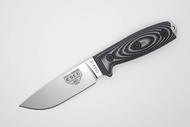
How an ESEE 4 in S35VN Steel Is Better Than the Standard
Jun 24 2026 - 5:03
The standard ESEE 4 in 1095 steel is an excellent knife. Large enough to double as a camp knife and handle rough work like clearing brush and batoning rounds, yet still nimble enough in the hand to serve as a camp kitchen knife or for relatively fine work, it is a do-all workhorse of a knife, which explains its popularity.
This is one of the reasons that ESEE reintroduced it in an S35VN variant with G10 scales, which in all ways except the steel alloy itself is the same as the flagship ESEE 4.
Yet, the steel makes a huge difference. Here’s what you should know about this variant of the ESEE, and the ways in which it is superior.
Where S35VN and 1095 Differ
Obviously, the material differences between the original ESEE 4 in 1095 and the variant made with S35VN come from the differences in the steel chemistry.
First up there is a fairly big difference in the carbon concentration. In 1095, it’s around .95%, which gives the steel alloy its name. In S35VN, there is around 1.4% carbon, nearly 50% more than there is in 1095.
There is also a significant amount of chromium, at 14%, along with 2% of molybdenum, 3% of the carbide-forming element vanadium, and a trace of niobium at .5%.
So let’s take a look at how this makes a difference in the performance of these steels.
What It Means for You
First, the higher concentration of carbon in the ESEE 4 in S35VN means that the latter can hold an edge for significantly longer, and the still is harder and generally more wear-resistant as well.
For those of you that have been frustrated with the softness of the 1095 used in most typical ESEE knives, this will be a big refreshment. And while an ESEE in S35VN steel will be harder to sharpen, it won’t be that much harder than 1095. You should still be able to bring back the edge in the field.
But it’s not just that S35VN has more carbon than 1095, which, though true, does not paint the entire picture. It also has some vanadium, which, at 3%, is more than enough to form enough carbides not only to change the grain structure of the steel, but to further improve wear resistance and general toughness. The same goes for niobium, which also forms carbides and which improves the wear resistance of alloys that contain it.
This, paired with the concentration of molybdenum, results in a steel that is also fairly tough, but there is a big caveat to publish here.
Strictly speaking, from the perspective of metallurgy, S35VN is a tougher steel than 1095. That is, it is less likely to snap or break when stressed. However, knifemakers and metallurgists know this, and as a result, they usually heat treat 1095 to lower hardnesses than S35VN. The result is that, while from just a perspective of steel chemistry S35VN is tougher, in real-world applications, they’re roughly equivalent.
Either way, an ESEE with a 1095 steel blade is going to be very tough. The same goes for one of their super steel models. Toughness here is roughly a wash.
The concentration of chromium in S35VN is also very important here, as 1095 has effectively no corrosion resistance to speak of, which is the primary reason that ESEE knives are powder coated. That signature powder coat is absent in the ESEE 4 in S35VN because it’s not needed.
You won’t have the same concerns with rust with an S35VN ESEE as you would with one in 1095, and on top of that, the lack of the powder coating also creates a lot less friction on the blade, which can make a big difference when executing tasks like batoning.
In other respects, including blade profile, dimensions, handle scales and scale contours, and other features, the ESEE in S35VN is the same as the one in 1095.
The bottom line is you get a knife with far better corrosion resistance, significantly better edge retention without being impossible to resharpen, and one that is at least as tough is not slightly tougher than the flagship ESEE 4.
That’s a solid value proposition and the reason for the higher price of the premium steel version.
Is there a time and place for the standard in 1095? Certainly, but does the upgrade deliver value? That’s a resounding yes.
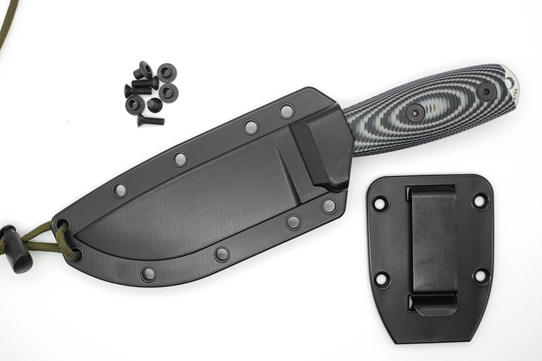
Here for an ESEE 4 in S35VN?
Want to learn more about the ESEE 4 in S35VN steel? You can learn more on our website but if you have questions that weren’t answered by this post, feel free to get in touch with us directly and we will be more than happy to help.