 FREE USA SHIPPING over $99

Knife Handle Materials: An Overview
Mar 10 2026 - 2:04
Back in the day, pretty much all knife handles and scales were made of wood or leather. Today, there is a wide assortment of options in handle scales for knives, from the simplest pocket knives to modern tactical knives.
This short post will break down some of the details associated with the more common materials used for handle scales for knives.
Natural Materials
One broad subcategory of handle scales for knives consists of natural materials. For simplicity’s sake, we’re including all metal alloys under natural materials.
● Wood
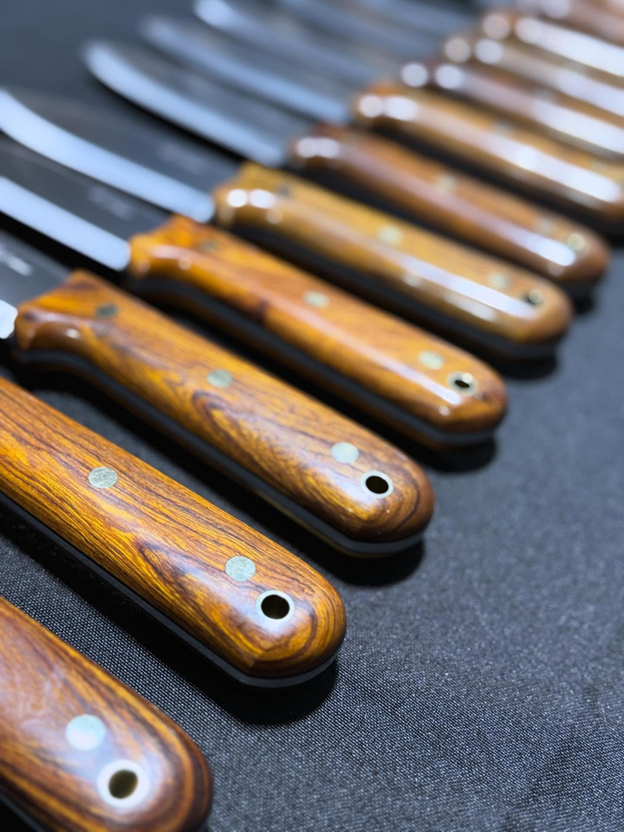
Wood has always been a popular material for knife handles and scales, and it remains so today. Popular woods used for knife scales include oak, beech, ebony, walnut, maple, cherry, and exotics like purpleheart, ironwood and cocobolo. Wood is comfortable, provides a sure grip and is safe to handle in the cold, but wood must be kept clean and well conditioned or it will rot, warp, split, or worse.
● Bone
Jigged bone is a common knife scale material, especially on traditional pocket knives like Case knives. Bone is harder and generally more durable than wood, but it should also be kept clean and well-conditioned because though it won’t rot like wood, it can deteriorate, split and crack.
● Antler
Antler is a very similar knife scale material to bone and for that reason the same notes apply.
● Horn
Horn is also used in knife scales, but it is much lighter and less dense than antler or bone. As a result, it is much more fragile than either of these and should be protected against abuse, as horn can easily crack or split if mishandled.
● Stacked leather
Some knives, such as traditional KA-BAR knives and some Ontario knives, are made with stacked leather handles. Stacked leather is soft, comfortable, affords an excellent grip in all conditions, but very durable. It also won’t “break” like wood or horn can, but if it is not kept dry and well-conditioned, it can become brittle, crack, or rot.
● Semi-precious stones
Some knives are made with scales of semi-precious stones such as turquoise or opal. These materials are pretty, and like bone, they’re fairly hard and tough. They require very little maintenance; the most important thing is not to abuse them because they can chip or break.
● Metal alloys
Numerous metal alloys are used in handle scales for knives, each of which offers its own properties.
○ Stainless steel
Stainless steel is a popular knife scale material because, despite its weight, it is exceptionally strong and corrosion resistant. It also needs very little maintenance.
○ Aluminum
Aluminum is like steel in strength and is also corrosion resistant, but it is much lighter. Anodized aluminum, which is even more corrosion resistant, is a popular option.
○ Titanium
Titanium is very strong and very corrosion resistant, making it a common metal alloy knife scale material despite the high price.
○ Brass
Softer than the other metals here, brass is a popular knife scale material because it is aesthetically pleasing and also very corrosion resistant.
○ Copper
Copper is popular for aesthetic reasons as well as for the fact that it will develop a beautiful patina with age. However, copper is very prone to corrosion so it must be kept clean or it will tarnish and corrode.
Synthetic Handle Scales for Knives
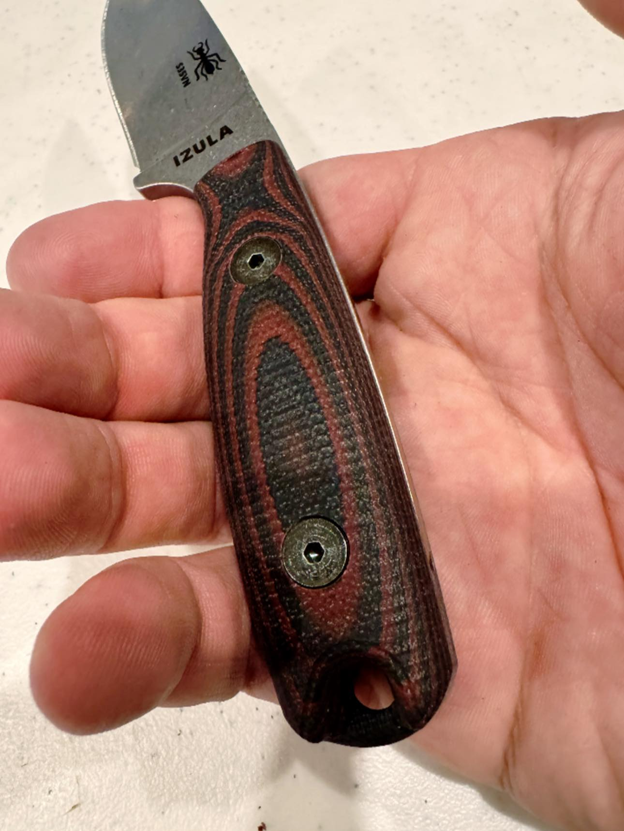
Many modern tactical knives and even some traditional pocket knives are now made with synthetic materials where natural materials were previously more popular. These are some of the more common options.
● G10
G10 is a fiberglass laminate, made of a fiberglass weave impregnated with and cured in resin. It is hard, relatively dense, and extremely strong and durable. It is also wear-resistant and impervious to most chemicals, as well as moisture. It also offers an excellent grip in the cold (and when wet) and never needs any maintenance.
● Micarta
Micarta is similar to G10 in that it is a laminate, except it is made with a textile, like linen or burlap (though it can be made with other fibrous weaves) that are then soaked or cured in resin or phenolic. Like G10 is it hard, wear-resistant, and offers a good grip even when wet, cold or greasy. It also is highly resistant to most chemicals and needs basically no maintenance.
● Carbon fiber (CF)
Carbon fiber consists of carbon fiber weaves cured in epoxy resin. It is lighter than G10 or micarta and effective as strong (in some cases, stronger). It also is very easy to care for and one of its only weaknesses is it is not necessarily as resistant to UV. Carbon fiber is also popular because it offers a lot of aesthetic variability.
● Glass-Filled Nylon (GFN)
Glass-filled nylon, also referred to as GFN, is a lightweight synthetic made of nylon reinforced with fiberglass, hence the name. It is light and low-maintenance, and fairly affordable, making it a popular synthetic material.
● Polypropylene (PP)
Polypropylene is a very low-cost synthetic used in the construction of some budget knife handles, such as those used by some Morakniv models. Despite its low-cost, it is very durable, fairly strong, chemically stable, and low-maintenance, making it a good all-purpose knife scale material.
Explore Custom Knife Scales Here
Hopefully you found this guide that covers some of the more popular types of natural and synthetic knife handle materials helpful.
If you’re here for custom handle scales for knives because you want to upgrade or personalize your favorite knife, check out our collection and get in touch with us if you have any questions about compatibility.