 FREE USA SHIPPING over $99

The Knife Connection’s Knife Steel Guide
Apr 7 2026 - 2:58
Looking through our collection of Boker Knives, TOPS Knives, ESEE Knives and everything else, knife steel can get confusing if you’re not all that familiar with metallurgy.
So we put together this guide to knife steels so you can parse the details from a high level.
What Matters in a Knife Steel
The three main attributes that users are looking for in a knife steel are:
- Edge retention (hardness): The primary determinants of a knife steel’s edge retention are its carbon concentration, the presence of carbide-forming elements like vanadium and tungsten, and the heat treatment. The harder a knife steel is, the longer it will hold an edge, but the tradeoffs are that the steel will be more brittle and usually harder to resharpen.
- Toughness: Toughness indicates how resistant the steel is to snapping, chipping, edge rolling, shattering or other forms of deformation. Carbon concentration influences this, as does the presence of other dense metals like molybdenum, manganese, tungsten and vanadium.
- Corrosion resistance: Corrosion resistance indicates how well a steel will resist rust and corrosion. The two main elements added to steel to improve corrosion resistance are chromium and nickel, and in knife steel mostly chromium is used. The more chromium there is, the better the steel will resist rust.
Common Knife Steels
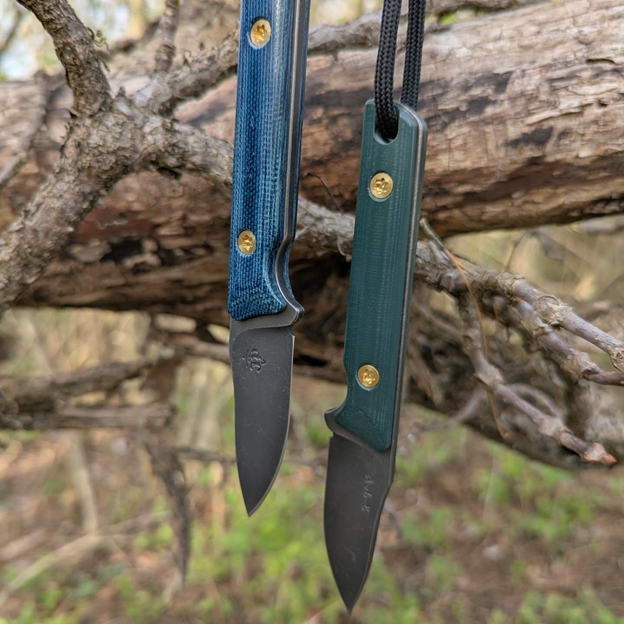
Below are some of the more common knife steels you will encounter.
● 1095
1095 is a tool steel with approximately .95% carbon in the matrix. It can take a decent heat treatment while remaining reasonably easy to resharpen and can be fairly tough, but it is terribly suspect to rust. Many ESEE Knives are made with this alloy.
● 1045, 1055, 1065 (and others in the 10XX class)
Along with 1095, there are many other common steels in the 10XX class, such as 1045, 1055, and 1065, which have carbon concentrations of .45%, .55%, and .65%, respectively. These are generally a little softer due to lower carbon concentrations which makes them a little tougher, but like 1095, they are also not corrosion resistant.
● 420HC
420HC is a budget steel that generally does not perform well, except that it is fairly corrosion resistant. The only quality knives that are routinely made with this alloy are Buck Knives.
● 8Cr13MoV
This is a relatively affordable steel that offers decent to low edge retention and low to fair toughness, but good corrosion resistance. It is a solid budget steel.
● 4116
The main advantage of 4116 is that it offers extremely good corrosion resistance and is relatively easy to sharpen. It is not the toughest or the hardest steel, though.
● 14C28N
Like 4116, 14C28N is extremely corrosion resistant, can take a very fine edge, and is fairly tough while remaining reasonably easy to sharpen.
● 440A
440A is similar to 420HC but has slightly more carbon, which means that it is slightly less corrosion resistant while offering slightly better edge retention.
● 440C
Many affordable, mass produced knives are made with 440C, which is desirable because it is corrosion resistant. However, it does not hold an edge long and is not that tough, despite being easy to sharpen.
● MagnaCut
MagnaCut is considered by some to be the best of all super steels, and offers excellent corrosion resistance, edge retention, and toughness. It’s even relatively easy to resharpen. The drawback is the high price.
● M390
M390 is rich in molybdenum, vanadium and tungsten, and is corrosion resistant while being very tough and able to hold an edge for a long time.
● N690
Relatively affordable as high-end steels go, the main virtue of N690 is corrosion resistance, thanks to a high concentration of chromium. Many Boker Knives in the Arbolito series are made with N695, an alloy very similar to N690, both of which are noted for their excellent resistance to rust.
● AEB-L
AEB-L is a tool steel that is very tough and very corrosion resistant, but which is not the best as far as edge retention is concerned.
● D2
D2 is a tough tool steel that can take a very fine edge. The most important notes for D2 are that it is tough and fairly easy to resharpen, but not exactly stainless. It is more corrosion resistant than other tool alloys like 1095, but will rust if you don’t care for it properly.
● VG10
VG-10 is a high-chromium steel that offers good corrosion resistance and reasonable to good edge retention. It is commonly used to make kitchen knives.
● ELMAX
ELMAX, like MagnaCut, is considered by many to be the best of the super steels. It is rich in chromium as well as in molybdenum and vanadium, so it offers great wear resistance and toughness paired with pretty good corrosion resistance.
● S90V
S90V is very hard, which means a few important things. It holds an edge for a long time, but the flipside is that it is a touch brittle and notoriously difficult to resharpen.
● S30V
The main selling points of S30V are that it is relatively affordable, holds an edge reasonably well and is somewhat corrosion resistant. It’s not the toughest alloy out there but all around it is good.
● S35VN
S35VN performs very similarly to S30V, and most would say it is a little tougher and harder while offering roughly the same corrosion resistance.
● CPM-CruWear
CPM-CruWear is similar to D2 but has less chromium and more vanadium and tungsten. As a result it offers slightly less corrosion resistance but better toughness.
● CPM-3V
Extremely tough, reasonably corrosion resistant and with solid edge retention properties, CPM-3V is a solid steel considered by some to be a super steel.
● 154CM
154CM is chemically similar to 440C except it has more molybdenum, making it tougher and giving it better edge retention and corrosion resistance.
● AUS-8
AUS-8 is like 400C except that it is slightly softer and has a bit less corrosion resistance. That said it is still considered a reasonably good budget stainless steel.
● AUS-10
AUS-10 is like a slightly upgraded version of AUS-8 steel, which offers slightly better edge retention but similar performance in other ways.
Explore The Knife Connection’s Collection Here
Whether you’re in the market for a new fixed blade or a folder, take a look through our collection of Buck, ESEE, Boker Knives and more and find something for your collection today.